Showing posts with label Academia. Show all posts

Friday, April 13, 2007

read a great book lately, supplemental


We haven't forgotten about our ongoing series Read a Great Book Lately? In fact, the next installment is just around the corner. The staff at The Shelf has been professionally and personally weighed down with things lately, so time has been it's usually fleeting self. We do not apologize for it, as those things involve livelihood, family, etc. and deserve our first priority. However, expect us to be more consistent with the usual Shelf antics very soon.

In the meantime, consider this post a supplement to our Book series. Recently Hugh Hewitt interviewed David Allen White, professor at the United States Naval Academy, and John Mark Reynolds, professor of philosophy at Biola University on his radio show. Hewitt asked discussed with them a sort of lifetime reading list of 30 books; a "top 30 you should read to understanding Western Civilization", if you will. Hewitt refers to it as "Hugh Hewitt's lifetime book reading list, or what you want every college freshman and sophomore to read".

I have mixed feelings about lists of this kind. I have been asked for my own list for burgeoning history students, and actually have been asked to post it here (I will in the future). On one hand, I am somewhat wary of them, as they tend to be slanted to the individual and their tastes. But I also find them fascinating for that very same reason; and I always come away with a new book to add to my ever growing "to read" pile. Therefore, I am always intrigued by them. This particular interview was very informative and I believe that everyone would benefit from reading most of the titles mentioned. I am afraid, as we have discussed here before, that too many students and even ex-students (you know, those people who have decided since they are no longer in school, they don't need to learn anymore) will be utterly unfamiliar with these books and so many more.

I am particularly intrigued by a comment (an echo of some of what we've written in the past) made by David Allen White towards the end of the conversation:
"...modern universities and colleges are the biggest fraud on the planet. And they continue to get away from it. They loathe Western civilization. They hate Western civilization, and they will do anything to destroy it, which means destroying the canon. If you don’t teach the young where they came from, and the greatness of the past, you can do away with the whole thing. And sadly, I think that’s what’s happening. Hugh, when I started teaching 37 years ago, I could count on my students having read certain books. We had a body of shared knowledge we could begin with. Now, no two students have ever read the same book, they barely read books at all. It is chaos in the classroom, and the price of these phony educations keep going up and up and up."

Amen.

For the record, I have personally have read about 1/2 to 2/3rds of the titles mentioned. Pretty sad, but, with the exception of one book, I am at least familiar with them. Again, I disagree with a few of the titles on the list. These things are, to some degree, personal by nature. But it's fun to see what others think and perhaps broaden your own horizons. In regards to trying to read some of these books or others outside of the classroom setting, all I can say is that your own education should not be defined or confined by a classroom. My great grandmother rejoiced at finding new books to read and new subjects to learn until her very last year. It made her mentally agile, one of the smartest people I'd ever met, and wicked at crossword puzzles. She wasn't university educated, but she was educated (perhaps all the more to her favor). She also inspired me and other grands and great grands to educational pursuits. John Mark Reynolds states in the interview:
"Adults can do this as well, but you need to find a good guide, you need to find someone who can help you get through things, and you need to understand that being bored is not a sin. Some things are hard to learn, but they’re worth learning. You need to press on and trying to get what you can. Repetitive reading of books is a great idea. If a book’s worth reading once, it’s generally worth reading multiple times. "

Read the interview, then go try out a title or two. That's what library cards are for anyway.
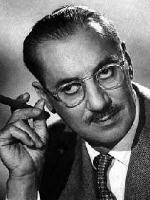

Oh, I know it's a penny here and a penny there, but look at me. I worked myself up from nothing to a state of extreme poverty.

Reading is a means of thinking with another person's mind; it forces you to stretch your own.


Tuesday, March 20, 2007

views and reviews on 300


Wolf and I have both seen 300 and have been knocked out by such a great piece of film making. However, I have been gathering my thoughts on the film, and yet have been reluctant to comment on it; especially with so much back forth going on out in the ether. From television, to radio and newspapers, and especially on the web- it seems everyone has something to say about the film. In such cases, I often hesitate to add something, just because I feel someone out there has said it better than I could have.
That being said I do want to add a couple of words- and direct you to a couple of excellent articles which I believe really tackle and discuss the merits of the film, and in a way discuss why it is being accepted by audiences and rejected by critics and cultural elitists. (and yes, sometimes they are one and the same, but I make the distinction here to include the non-critic talking heads that pop up on TV). This is sort of a roundup on the views and reviews I've seen on 300 that I believe really "get it".

First off:
Christian Johnson over at Cinerati, has written two of the best articles on the whys and why nots 300 has been recieved or rejected, and understanding it in terms of both it's origin from the greek ideals and the graphic novel storytelling aspect . They are worth reading. An excerpt:

"One of the classical virtues is that of thumos a kind of spritedness which combines patriotism and courage. It is the virtue that is central to the Spartan society. In fact, Spartan society might be said to value thumos over almost any other part of virtue as we understand it. Spiritedness is a powerful force in people, we like to take pride in our society and we value those who fight to defend it. That is thumos in a nutshell and that is what 300 is about. The film doesn't spend time showing us the ways that Sparta was unjust, and they were in many ways, because then the film -- and comic -- would be about Sparta. This film isn't about Sparta, it is about thumos."
Read the whole article here and a previous excellent article here.

Then the gang over at Libertas have offered a review and several articles that you can read: here, here, and here.

Of course, Victor Davis Hanson offered some excellent thoughs on history and 300 here and here. An excerpt:
Many of the most famous lines in the film come directly either from Herodotus or Plutarch's Moralia, and they capture well, in the historical sense, the collective Spartan martial ethic, honor, glory, and ancestor reverence (I say that as an admirer of democratic Thebes and its destruction of Sparta's system of Messenian helotage in 369 BC). Why—beside the blood-spattering violence and often one-dimensional characterizations—will some critics not like this, despite the above caveats?
Ultimately the film takes a moral stance, Herodotean in nature: there is a difference, an unapologetic difference between free citizens who fight for
eleutheria and imperial subjects who give obeisance. We are not left with the usual postmodern quandary 'who are the good guys' in a battle in which the lust for violence plagues both sides. In the end, the defending Spartans are better, not perfect, just better than the invading Persians, and that proves good enough in the end. And to suggest that ambiguously these days has perhaps become a revolutionary thing in itself.


I would only add my following comment to the above: The cultural elitists own worldview tends to make them look askew at one of the most artistic films I have seen in recent memory. There is no coincidence that academia has seen a decline in the offering of classical liberal arts education and degrees. As one professor once told me, "It's called ancient for a reason. Their ideas are dusty- we are more interested in the modern and post modern. The hold more for us." Undoubtabley so. The post modern holds so many tiny nooks and crannies within which one can claim expertise and obscure wisdom , and yet at the same time pass judgement and claim moral relativistism. Ancient and classical history and literature is so often disdained in academia that now it has started to go full circle, and there is an effort to bring it back, much to the chagrin of some history professors who look at political and military history in general as passe and dangerous.

IF you think I'm just flapping my gums about the vapid, self-absorbed post modernists, then read Dr. Sanity's excellent article here on why the post-modernists (in a nutshell, cultural elitists) are in an uproar about this film. An excerpt:

Once upon a time intellectuals who sought to understand the modern world looked to the giants of intellectual thought from humanity's past. In the wisdom of their writings we would be able to find the words and meanings relevant to analyzing the events of today. But now, it is as if history has been turned upside down. We no longer look to the past to understand ourselves and our journey--instead we use our present feelings and our modern understandings and prejudices to reinterpret and deconstruct the past.
...That this rather perversely condescending and ultimately nihilistic tendency is a direct result of the essential narcissism of our times there is no doubt. Only a narcissist of the most pathological sort could or would haughtily dismiss Plato or Aristotle as merely primitive Greeks; or reject the writings of a Thomas Jefferson or John Adams because they were white male slaveholders. Only a self-absorbed postmodernist who believes he has all the answers to not only current problems, but that his superior and perfect intellect has nothing to gain by considering the admittedly imperfect thinkers and ideas of the past.
Read the whole article.

If you haven't seen 300, I would recommend it. But be warned, you may just come out of the film wanting the bad guys to lose and the good guys to win. And the cultural elitists can't have that.

Oh, I know it's a penny here and a penny there, but look at me. I worked myself up from nothing to a state of extreme poverty.

A new age has come, an age of freedom. And all will know that 300 Spartans gave their last breath to defend it.


LinkWithin

Blog Widget by LinkWithin