Showing posts with label Film theory. Show all posts

Monday, September 15, 2008

must read monday...

Today's must read article is an offering from Stefan Kanfer (also author on several books on Film, Theater and several classic film star biographies including one on Groucho Marx) writing in The City Journal. His article, In Living Black and White, is one of the most thoughtful, engaging pieces on the importance and majesty of black and white classic films that I've read in a long time. It reminds me of similar discussions I've had in class with students who protest when we screen black and white films for class.

An excerpt:
"The owner of my local video-rental place puts it succinctly: “Most of our customers are under 30. The way they see it, life is in color, so why not movies? Which is why we stopped offering black-and-whites, except for the classics. You know, Chaplin, the Marx Brothers, Citizen Kane, Casablanca, Schindler’s List, maybe a couple of Woody Allens.
If that’s the current standard, libraries will soon begin removing volumes of poetry from their shelves. After all, life is in prose, so why not books? Alas, what the customers don’t realize is that B&W cinema remains vital, and often beautiful, because it’s not a reflection of everyday existence."
(Kanfer, para.2-3)

If you love classic film, or if you can't get past the whole color versus black and white film thing, than this is mandatory reading. Be sure to check it out.

Oh, I know it's a penny here and a penny there, but look at me. I worked myself up from nothing to a state of extreme poverty.

It's too cerebral! We're trying to make a movie here, not a film!


Thursday, May 15, 2008

film class redux


As many of you many remember I have been teaching an Introduction to Film Studies Class, and I asked readers to contribute suggestions for films to show to a class who have no experience in watching classic films. For the purpose of the class, I defined classic films as pre-1967 and modern classics as 1967-1999. Everything else fell under the heading of "recent." And, wow, there were some great comments everyone and great suggestions. (Impressive lists Laura & Jacqueline).

Here are some of your suggestions:
Ed: The Thin Man series.
Tammy: Casablanca & Citizen Kane
Caitlin: The Adventures of Robin Hood (Flynn style, yo)
brewjoe: The Wizard of Oz
Laura: Singin' in the Rain, The Searchers, Rio Bravo, Meet Me in St. Louis, Love Me Tonight, and of course Hitchcock: Notorious, Foreign Correspondent, North By Northwest and Rear Window.
Bryan: To Be or Not to Be (the mighty Jack Benny and lovely Carole Lombard)
and
Jacqueline: The Grapes of Wrath, My Man Godfrey, Mrs. Miniver, She Wore a Yellow Ribbon, The Kid, Sullivan's Travels, Top Hat (or any Fred and Ginger), 42nd Street and The Lady Eve.

I also think Jacqueline had a great comment that deserves to be repeated: " I think we must make clear first that watching a classic film is like time travel. You just have to accept things you don't quite understand. Eventually, you will understand." That is very true, but I have also experienced that the basic elements of story and character can transcend time. The other parts of the film that may be dated or different, can be understood later. Which is one reason why repeated viewing of classic films can be great or instructive.When I interviewed Robert Osborne, erstewhile TCM host, earlier this year, I was struck by a comment he made:
"...some of these great movies we have..., [The thing about them] is that they almost refuse to let you leave once you get in. They’re like page turners in a book. One scene just takes you to the other. I’m forever saying, “Oh, well, I’m just going to wait until that scene where they do this or that scene where Ingrid Bergman does that”, but you’re still there at the end of the movie. It’s one of those things that’s so great about good film making."
Great films, not just classic films, all have the same quality: The ability to suck you in.

I've taken some of your suggestions and incorporated some of them. I've exposed my class to quite a bit, with varying degrees of success. My number one rule with them was, even for their weekly personal film viewing assignments, to watch something they've never seen before.
We watched in class:
The Third Man
In the Heat of the Night
Rio Bravo
The French Connection
The Jazz Singer
Double Indemnity
Bad Day at Black Rock
Singin In the Rain
North By Northwest
The Searchers

It has been interesting to hear their comments. I was really surprised by how much they took to certain films - like Singin in the Rain. None of them expressed any fondness for musicals- but they loved it. As Laura said: "Singin' in the Rain is a good one because the comedy wins them over." Very, very true! They were also impressed by the dancing- it really floored them. Some of them even asked why we don't see that kind of talent anymore. It goes to show - sometimes a great flick is a great flick.

I've even been more surprised by some of their personal choices- one student watched Anna Karenina with Vivian Leigh because it was on, and she needed to watch a film for class. She loved it and has since been exploring more of Vivian Leigh's films. She also loved Imitation of Life- and I've recommended some other films like Waterloo Bridge, All This and Heaven Too, Gaslight, Camille, and others- and now that student is off on a great journey of her own.

In an introductory class such as this- I think the main goal is just that: introducing students to many types of films and give them the tools to be able to interpret or understand them. That requires lessons in film terms, film techniques and film history in addition to showing films that display some of the topics discussed. For a more advanced class I think silent films, foreign films and others would be ripe for discovery. In fact, if I had access to a decent copy of Greed, I would've shown it anyway- it is that good.


All in all, I think success comes from their willingness to explore more films (especially further back than the 80's as I found that's where their "movie memory", as it were, stopped). And I don't think I could've said it better than one student who said- "the great thing about these old movies, is that there a whole bunch of them to watch." Exploring is always more fun when there is a lot of treasure to find.

Oh, I know it's a penny here and a penny there, but look at me. I worked myself up from nothing to a state of extreme poverty.

Talking pictures, that means I'm out of a job. At last I can start suffering and write that symphony.


Tuesday, March 20, 2007

views and reviews on 300


Wolf and I have both seen 300 and have been knocked out by such a great piece of film making. However, I have been gathering my thoughts on the film, and yet have been reluctant to comment on it; especially with so much back forth going on out in the ether. From television, to radio and newspapers, and especially on the web- it seems everyone has something to say about the film. In such cases, I often hesitate to add something, just because I feel someone out there has said it better than I could have.
That being said I do want to add a couple of words- and direct you to a couple of excellent articles which I believe really tackle and discuss the merits of the film, and in a way discuss why it is being accepted by audiences and rejected by critics and cultural elitists. (and yes, sometimes they are one and the same, but I make the distinction here to include the non-critic talking heads that pop up on TV). This is sort of a roundup on the views and reviews I've seen on 300 that I believe really "get it".

First off:
Christian Johnson over at Cinerati, has written two of the best articles on the whys and why nots 300 has been recieved or rejected, and understanding it in terms of both it's origin from the greek ideals and the graphic novel storytelling aspect . They are worth reading. An excerpt:

"One of the classical virtues is that of thumos a kind of spritedness which combines patriotism and courage. It is the virtue that is central to the Spartan society. In fact, Spartan society might be said to value thumos over almost any other part of virtue as we understand it. Spiritedness is a powerful force in people, we like to take pride in our society and we value those who fight to defend it. That is thumos in a nutshell and that is what 300 is about. The film doesn't spend time showing us the ways that Sparta was unjust, and they were in many ways, because then the film -- and comic -- would be about Sparta. This film isn't about Sparta, it is about thumos."
Read the whole article here and a previous excellent article here.

Then the gang over at Libertas have offered a review and several articles that you can read: here, here, and here.

Of course, Victor Davis Hanson offered some excellent thoughs on history and 300 here and here. An excerpt:
Many of the most famous lines in the film come directly either from Herodotus or Plutarch's Moralia, and they capture well, in the historical sense, the collective Spartan martial ethic, honor, glory, and ancestor reverence (I say that as an admirer of democratic Thebes and its destruction of Sparta's system of Messenian helotage in 369 BC). Why—beside the blood-spattering violence and often one-dimensional characterizations—will some critics not like this, despite the above caveats?
Ultimately the film takes a moral stance, Herodotean in nature: there is a difference, an unapologetic difference between free citizens who fight for
eleutheria and imperial subjects who give obeisance. We are not left with the usual postmodern quandary 'who are the good guys' in a battle in which the lust for violence plagues both sides. In the end, the defending Spartans are better, not perfect, just better than the invading Persians, and that proves good enough in the end. And to suggest that ambiguously these days has perhaps become a revolutionary thing in itself.


I would only add my following comment to the above: The cultural elitists own worldview tends to make them look askew at one of the most artistic films I have seen in recent memory. There is no coincidence that academia has seen a decline in the offering of classical liberal arts education and degrees. As one professor once told me, "It's called ancient for a reason. Their ideas are dusty- we are more interested in the modern and post modern. The hold more for us." Undoubtabley so. The post modern holds so many tiny nooks and crannies within which one can claim expertise and obscure wisdom , and yet at the same time pass judgement and claim moral relativistism. Ancient and classical history and literature is so often disdained in academia that now it has started to go full circle, and there is an effort to bring it back, much to the chagrin of some history professors who look at political and military history in general as passe and dangerous.

IF you think I'm just flapping my gums about the vapid, self-absorbed post modernists, then read Dr. Sanity's excellent article here on why the post-modernists (in a nutshell, cultural elitists) are in an uproar about this film. An excerpt:

Once upon a time intellectuals who sought to understand the modern world looked to the giants of intellectual thought from humanity's past. In the wisdom of their writings we would be able to find the words and meanings relevant to analyzing the events of today. But now, it is as if history has been turned upside down. We no longer look to the past to understand ourselves and our journey--instead we use our present feelings and our modern understandings and prejudices to reinterpret and deconstruct the past.
...That this rather perversely condescending and ultimately nihilistic tendency is a direct result of the essential narcissism of our times there is no doubt. Only a narcissist of the most pathological sort could or would haughtily dismiss Plato or Aristotle as merely primitive Greeks; or reject the writings of a Thomas Jefferson or John Adams because they were white male slaveholders. Only a self-absorbed postmodernist who believes he has all the answers to not only current problems, but that his superior and perfect intellect has nothing to gain by considering the admittedly imperfect thinkers and ideas of the past.
Read the whole article.

If you haven't seen 300, I would recommend it. But be warned, you may just come out of the film wanting the bad guys to lose and the good guys to win. And the cultural elitists can't have that.

Oh, I know it's a penny here and a penny there, but look at me. I worked myself up from nothing to a state of extreme poverty.

A new age has come, an age of freedom. And all will know that 300 Spartans gave their last breath to defend it.


Thursday, January 25, 2007

ridley scott gets it

One of my pet peeves as both a student of history and a student of film, is that so often the two mix like oil and water. The students, I mean. I have heard many discussions where the historians discuss an upcoming "Historical film" and go out on a limb to make everyone understand that "things didn't happen that way." I have also heard similar discussions from film critics, who, absent any knowledge of history, feel the director or "artist" has a responsibility to bring out the emotion and story and shouldn't have to worry about facts. In other words, when it comes to art one must require carte blanche.

I believe that most of these discussions occur within groups of pointy-headed and uptight cultural elitists. (I oughtta know, I have observed them in their natural habitats. Ahem.) Most of what I am talking about has to do with their attitudes towards the audience. Some issues lie within how much academic historians distrust "popular history" and the general public's perception and understanding of it (For some reason they can't figure out why their monograph on the evolution of the toothbrush in 17th century in the Atlantic world never flew off the shelves).

Also some critics and film makers have issues with how things really happened in the past, and their reluctance to be bold enough to address them in an honest way. ("Historical notions of class and courtship? Pish posh! We have to put a modern spin on it! And, all the white guys are the bad guys. Don't forget!")


Me - well, I take a different view. What we have are essential forms of communication: film and books or teaching. When I go to a movie, I generally do not expect to see a museum documentary (which, if we are being honest, also have their slants). And when I go to a museum, I generally don't expect to see CGI, Russell Crowe, or a car chase. In essence, I believe there are a lot of people who understand the difference. That is not to say I don't believe film makers have a responsibility to some degree of accuracy when portraying a historical time or figure, I do. I also believe that historians and writers have a responsibility to accuracy and to working towards a better understanding of the past as well as some degree of objectivity. In other words, I believe that the two sides can learn from each other. And I believe that films, with some accuracy, can take some creative liberty with events, etc. as long as it is done responsibly. It is, after all, entertainment. And this entertainment can lead to more learning and understanding of the past. Film makers should use historians, not just as consultants, but as launching pads; ways to introduce and discuss the film. As long as they are upfront about what they are doing. I tend to be wary of the film maker who claims his film is the "true story," because, that is not always possible. Point of view, experiences, and biases always play some role in any narrative form, whether it's film making or history. An excellent demonstration is Kurosawa's great film, Rashomon.

By the same token, historians shouldn't be so quick to condemn or judge. They have got to get out of the ivory tower every now and then. They need to realize that films can be the springboard to further learning. I had a professor who showed several "Hollywood" films and then led a discussion on what was the real story and what wasn't, and encouraged us to read more about the subject, now that we were interested. It's much like what we talked about, in regards to history books- interest is half the battle. That professor got it. He understood that he would be more successful in making sure the real story was understood, not by trying to fight the film, but rather by incorporating the film in the discussion, weighing its pros and cons, and capturing that interest.

Someone else who "gets it" is film maker Ridley Scott. I have been enamored of the four disc director's cut of his film, Kingdom of Heaven. The film didn't do that well at the initial American box office, for two reasons. Primarily because the studio forced cuts which should never have been made. Many critics, after seeing the theatrical version, didn't like it, but have since retracted some of those criticisms upon seeing the director's cut. Many said that it was the version that should have been released. Fox made a critical area in that regard. Secondly, historians, critics and political pundits lambasted the film from all sides. Christian critics had problems with it because it portrayed the Crusaders too harshly and was pro-Muslim. Muslims critics stated that the film wasn't accurate and too harsh in their portrayal of Muslims. Historians took issue with everything. All of this came out, before the movie premiered. These two issues really hampered the film with movie goers.

Then came the DVD. Ridley is not afraid of discussing, not just how the film was made, but also why he made certain choices that he made. He is also quick to point out "I'm a moviemaker, not a documentarian. I was brought up on Ingmar Bergman, and in The Seventh Seal and The Virgin Spring, he brilliantly touched on areas where you can talk about religion without any discomfort. I try to hit the truth. We try to show both sides in a very balanced light." And it's not just about balance, as it is about making a film, with some accuracy to history, but also acknowledging where things are fictionalized and what was the real story. The 4 disc DVD set includes a documentary feature with several historians and theologians called "Creative Accuracy", which discusses the actual story and historical figures and what was accurate and what was not. This is somewhat bold, but wonderful, as there are several features in both the two disc and four disc versions which attempt to discuss actual events and what in essence is a movie. Ridley uses the DVD as way to springboard into discuss of a subject he is passionate about and a movie he clearly loves. The scriptwriter, William Monahan, also discusses his lifelong research and interest in the crusades, and how Ridley and Tony Scott sent him every book he requested for even more research while finishing the script.

In the the great commentary track, Ridley discusses why he loves to do historical pieces, and why it's important try and get it right: "I love to create the world, which I know I keep saying this, and I've said this before, but I actually think the real enjoyment is in creating an environment and a world that you feel lives, within which you are going to put your characters. And that's going to become one of the characters in the movie;, how the movie is presented. So standing here, on a daily basis, in January, on the foothills of the Pyrenees, with all these people dressed this way, eating medieval food, with horses, shoeing the horses, the smell of the burning horn on the [horse's hoof], I really felt like I was at that particular period. And that is really one of the thrills of doing this, and the smell of the livestock, the smell of the chickens...and you are literally in a time-warp. You've got a modern unit standing in a time warp. Thats if it's done properly. And that's my job, that's one of my big additions to what I do as a filmmaker; to make sure the whole world that I am dealing with is real."

Ridley also "gets it" about DVDs and the audience. When discussing on the commentary track about the cuts the studio pushed for, he explains that flashback scenes with the main character's wife (who is dead in the beginning in the film) were among those requested to be cut by the studio. He explains that audiences understand the story, and if the studio and film maker are willing to trust the audience, so to speak, they will appreciate nuances and more scenes that expound the character or story. He states "I think there is a tendency today to say 'Let's get to the story quicker and we're going to put the film out to movie houses.' I think the value of this digital market is that people are more willing or more ready to sit at home and actually enjoy the longer version. Thank God for DVD." Ridley Scott is one of the few directors today, who understands the home DVD market and audiences, and appreciate that a director can really give them something to enjoy and value after they have left the theater. His different DVD sets of films like Kingdom of Heaven, Gladiator, Blackhawk Down, and even Legend aren't double dips. I haven't thrown my other sets away or sold them, when I've gotten the extended sets. There are great extras. My Kingdom of Heaven set has become a virtual five disc set, including the bonus disc of the two disc set.

I heartily recommend the four disc Director's cut of Kingdom of Heaven. Here is the DVD Times review for you to check out.
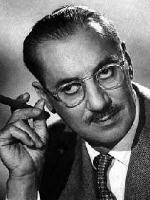
Oh, I know it's a penny here and a penny there, but look at me. I worked myself up from nothing to a state of extreme poverty.

I put no stock in religion. By the word religion I have seen the lunacy of fanatics of every denomination be called the will of god. I have seen too much religion in the eyes of too many murderers. Holiness is in right action, and courage on behalf of those who cannot defend themselves, and goodness.


LinkWithin

Blog Widget by LinkWithin