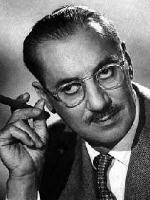
A man must have integrity. He's not entitled to free thought unless he's willing to pay the price of admitting it. Dare not admit what I believe, then I have no right to believe it

 One of my pet peeves as both a student of history and a student of film, is that so often the two mix like oil and water. The students, I mean. I have heard many discussions where the historians discuss an upcoming "Historical film" and go out on a limb to make everyone understand that "things didn't happen that way." I have also heard similar discussions from film critics, who, absent any knowledge of history, feel the director or "artist" has a responsibility to bring out the emotion and story and shouldn't have to worry about facts. In other words, when it comes to art one must require carte blanche.
 Me - well, I take a different view. What we have are essential forms of communication: film and books or teaching. When I go to a movie, I generally do not expect to see a museum documentary (which, if we are being honest, also have their slants). And when I go to a museum, I generally don't expect to see CGI, Russell Crowe, or a car chase. In essence, I believe there are a lot of people who understand the difference. That is not to say I don't believe film makers have a responsibility to some degree of accuracy when portraying a historical time or figure, I do. I also believe that historians and writers have a responsibility to accuracy and to working towards a better understanding of the past as well as some degree of objectivity. In other words, I believe that the two sides can learn from each other. And I believe that films, with some accuracy, can take some creative liberty with events, etc. as long as it is done responsibly. It is, after all, entertainment. And this entertainment can lead to more learning and understanding of the past. Film makers should use historians, not just as consultants, but as launching pads; ways to introduce and discuss the film. As long as they are upfront about what they are doing. I tend to be wary of the film maker who claims his film is the "true story," because, that is not always possible. Point of view, experiences, and biases always play some role in any narrative form, whether it's film making or history. An excellent demonstration is Kurosawa's great film, Rashomon.
 Someone else who "gets it" is film maker Ridley Scott. I have been enamored of the four disc director's cut of his film, Kingdom of Heaven. The film didn't do that well at the initial American box office, for two reasons. Primarily because the studio forced cuts which should never have been made. Many critics, after seeing the theatrical version, didn't like it, but have since retracted some of those criticisms upon seeing the director's cut. Many said that it was the version that should have been released. Fox made a critical area in that regard. Secondly, historians, critics and political pundits lambasted the film from all sides. Christian critics had problems with it because it portrayed the Crusaders too harshly and was pro-Muslim. Muslims critics stated that the film wasn't accurate and too harsh in their portrayal of Muslims. Historians took issue with everything. All of this came out, before the movie premiered. These two issues really hampered the film with movie goers.
 Ridley also "gets it" about DVDs and the audience. When discussing on the commentary track about the cuts the studio pushed for, he explains that flashback scenes with the main character's wife (who is dead in the beginning in the film) were among those requested to be cut by the studio. He explains that audiences understand the story, and if the studio and film maker are willing to trust the audience, so to speak, they will appreciate nuances and more scenes that expound the character or story. He states "I think there is a tendency today to say 'Let's get to the story quicker and we're going to put the film out to movie houses.' I think the value of this digital market is that people are more willing or more ready to sit at home and actually enjoy the longer version. Thank God for DVD." Ridley Scott is one of the few directors today, who understands the home DVD market and audiences, and appreciate that a director can really give them something to enjoy and value after they have left the theater. His different DVD sets of films like Kingdom of Heaven, Gladiator, Blackhawk Down, and even Legend aren't double dips. I haven't thrown my other sets away or sold them, when I've gotten the extended sets. There are great extras. My Kingdom of Heaven set has become a virtual five disc set, including the bonus disc of the two disc set.

